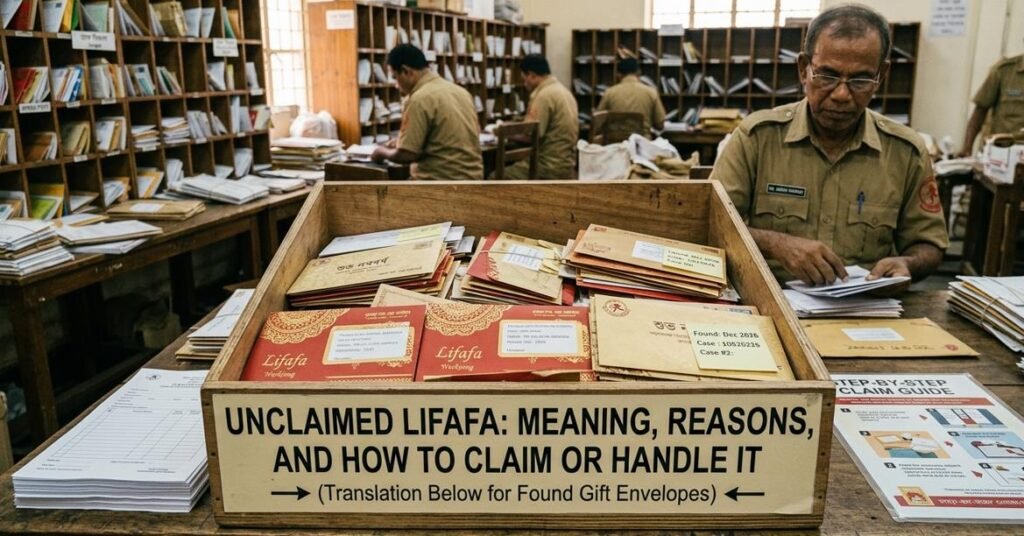

Have you ever heard the term “unclaimed lifafa” and wondered what it means? Whether you are waiting for an important letter, sending a gift envelope, or trying to understand why a postal item has not reached its destination, this phrase can raise several questions. A lifafa is commonly understood as an envelope, especially one used for letters, invitations, greeting cards, money, or gifts. When it becomes unclaimed, it generally means that the intended recipient has not collected or accepted it within the relevant circumstances.
However, an unclaimed lifafa does not always mean that the envelope has been lost, abandoned, or permanently unavailable. Sometimes the recipient was absent, the address was incomplete, or the delivery service could not complete its delivery. we will explain the meaning of an unclaimed lifafa, the common reasons it remains unclaimed, what may happen afterward, and the practical steps you can take to claim or handle one responsibly.
Read More: DMI Finance: Personal Loans, Eligibility, EMI, App and Online Services
What Does Unclaimed Lifafa Mean?
An unclaimed lifafa is an envelope that has not been collected, accepted, or received by its intended recipient. The exact meaning depends on whether the envelope is being handled by a postal service, a courier company, or an individual. For example, imagine that someone sends an envelope containing a wedding invitation to a relative. If the relative is away from home and does not collect the envelope from the delivery office, it may eventually be recorded as unclaimed under the delivery service’s procedures.
Similarly, a gift envelope given to someone at a family gathering may remain unclaimed if the intended recipient never receives it. The term itself does not automatically indicate that the envelope contains money, valuable documents, or anything unusual. Its contents could be a simple letter, a greeting card, an invitation, or another type of correspondence.
The Meaning of Lifafa
The word “lifafa” is commonly used in South Asian languages, including Hindi and Urdu, to refer to an envelope. In everyday South Asian culture, a lifafa may have a broader meaning than an ordinary paper envelope. It can refer to an envelope containing money given during weddings, religious celebrations, birthdays, family gatherings, and other special occasions.
For example, a wedding guest might give a lifafa containing a monetary gift to a newly married couple. If the envelope is accidentally left behind or never reaches the couple, it could be described informally as an unclaimed lifafa. In postal situations, however, the term usually refers to an envelope or letter that has not been collected or delivered to its intended recipient.
The Difference Between Undelivered and Unclaimed Mail
Although people sometimes use these terms interchangeably, they describe different situations. Undelivered mail means that a postal service or courier has not successfully delivered an item to its intended destination. This could happen because of an incorrect address, an unsuccessful delivery attempt, or another problem.
Unclaimed mail generally refers to an item that remains uncollected or unaccepted after the recipient has had an opportunity to receive it. An envelope can initially be undelivered and later become unclaimed, depending on the delivery service’s procedures. However, not every undelivered item is officially classified as unclaimed. Understanding this difference helps you identify whether your next step should be Correcting an address, checking delivery status, or contacting the organization holding the item.
Why Does a Lifafa Remain Unclaimed?
There are several reasons why an envelope may remain unclaimed. Most involve ordinary delivery problems, communication issues, or circumstances affecting the sender or recipient.
Incorrect or Incomplete Address
One of the most common reasons for unsuccessful delivery is an incorrect or incomplete address. A sender might forget to include the house number, village name, postal code, road name, or other important information. In some cases, the recipient’s name may not match the name used at the delivery location. When a delivery worker cannot identify the correct destination, the envelope may be delayed, returned, or held according to the service’s procedures. To reduce this risk, always double-check the recipient’s full name, address, postal code, and contact number where applicable.
Recipient Unavailable
Sometimes the address is completely correct, but nobody is available to receive the envelope. The recipient may be traveling, working outside the home, staying temporarily at another location, or unable to visit the collection office. For registered or tracked items, the delivery service may attempt delivery again or leave a notification explaining how the recipient can collect the item. If the envelope is not collected within the applicable period, further handling depends on the postal operator or courier’s rules.
Refused Delivery or Uncollected Mail
A recipient may refuse an envelope for personal, administrative, or practical reasons. For example, the person might not recognize the sender, may no longer live at the address, or may decide not to accept the correspondence. In another situation, a recipient may receive a delivery notification but forget to collect the envelope. Refused and uncollected items can receive different handling depending on the service and the type of mail. A refused item may be returned to the sender, while an uncollected item may be held for a specified period before further action.
Missing Sender Information
An envelope without a complete return address can be difficult to return when delivery fails. The sender’s address helps postal staff identify where an undelivered item should go. Without that information, returning the envelope may not be possible through the usual process. For important correspondence, including financial documents, legal papers, and official letters, providing accurate sender information is particularly useful.
What Happens to an Unclaimed Lifafa?
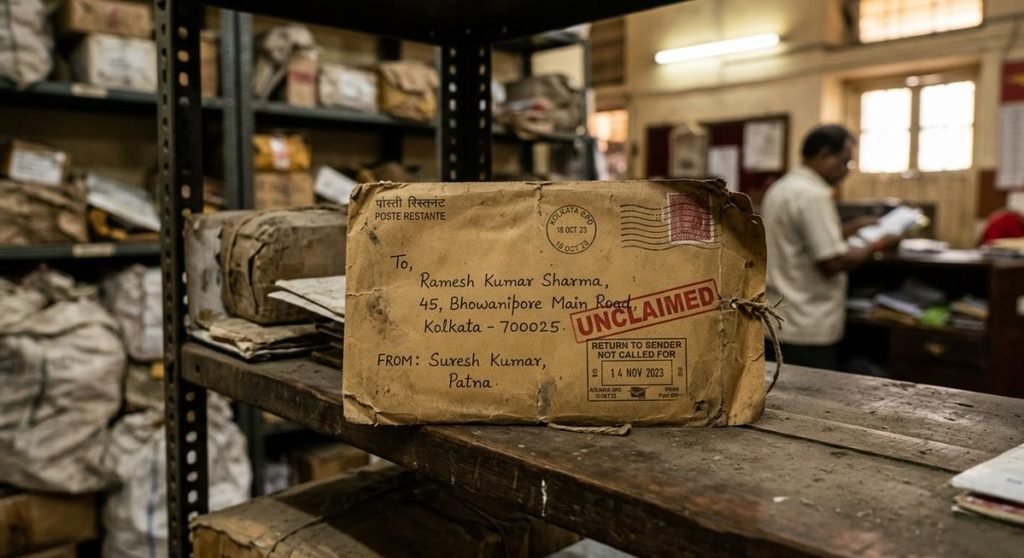
The next step depends on where the envelope is located, how it was sent, and which organization is responsible for handling it. There is no single rule that applies to every unclaimed lifafa. Ordinary letters, registered mail, courier parcels, and personal gift envelopes may all follow different procedures. The following table summarizes common situations.
| Situation | Possible outcome | What you can do |
| Recipient is unavailable | Another delivery attempt or temporary holding | Contact the delivery service |
| Address is incorrect | Delivery delay or return to sender | Verify and correct the address |
| Registered item is uncollected | Held for a period, then handled under service rules | Check tracking and collection instructions |
| Sender’s address is missing | Return may be difficult or impossible | Contact the postal operator |
| Personal gift envelope is misplaced | Held by the organizer or another person | Contact the event organizer or giver |
Postal Handling and Return Procedures
Postal operators and courier companies generally have procedures for handling mail that cannot be delivered. Depending on the service, an envelope may be held at a delivery office, returned to the sender, transferred to another authorized facility, or handled through a designated undeliverable-mail process. Tracked items may provide additional information through a tracking number or delivery notification.
Personal or Gift Envelopes
An unclaimed lifafa used for a personal gift is different from an unclaimed postal item. Suppose a family member prepares several gift envelopes for a wedding. One envelope is accidentally left on a table after the event. In this case, the envelope may be with the event organizer, a family member, or the person responsible for collecting gifts. The appropriate action is to contact the organizer or giver privately and explain the situation.
How to Claim an Unclaimed Lifafa
If you believe that an envelope addressed to you is being held by a postal service or courier, taking a few practical steps can help you determine whether it is available for collection.
Identify the Delivery Service
Start by finding out which organization handled the envelope. Check any tracking message, delivery notification, receipt, email, or reference number provided by the sender. If you do not know the delivery service, contact the sender and ask which postal operator or courier was used.
Check the Tracking Status
If the envelope has a tracking number, enter it into the delivery service’s official tracking system. Look for information such as:
- Whether the item has reached your local delivery office.
- Whether a delivery attempt was unsuccessful.
- Whether the envelope is awaiting collection.
- Whether the item has been returned to the sender.
Contact the Appropriate Office
If the envelope appears to be held at a local office, contact that office using its official telephone number or customer service channel. Provide the tracking number, recipient’s name, and delivery address. Ask whether the envelope is still available, whether you can collect it personally, and whether someone else can collect it on your behalf. Do not assume that every office accepts collection without prior confirmation.
Prepare Identification and Supporting Information
The documents required depend on the organization and the type of item. You may be asked to provide:
- A valid form of identification.
- The tracking number or delivery notification.
- The recipient’s name and address.
- Proof of authorization if collecting for another person.
Follow the Official Collection Instructions
Once the delivery service confirms that the item is available, follow its instructions carefully. If a collection deadline applies, ask for the exact date. If the item has already been returned to the sender, contact the sender to arrange another delivery. For an envelope containing important legal, financial, or official documents, keep any receipt or delivery confirmation after collection.
What to Do If You Find an Unclaimed Lifafa
Finding an envelope that appears to belong to someone else requires care, especially if it contains personal information or money.
Protecting Privacy and Personal Property
If you find an envelope at a public place, workplace, wedding venue, or residential building, avoid opening it simply to find out what is inside. Check only the outside for information that can help identify the proper recipient or responsible organization. If the envelope appears to be postal mail, hand it to the postal service or an appropriate authorized representative. If it was found at a private event, contact the organizer or venue management. An envelope bearing another person’s name or address should not be treated as yours merely because nobody has claimed it yet. If it contains money, Identification documents, bank information, or other valuable material, arrange a secure handover and avoid sharing photographs of its contents online.
Avoiding Scams and Suspicious Envelopes
Be cautious if someone contacts you unexpectedly and claims that you have an unclaimed lifafa containing a large amount of money or a valuable prize. A legitimate delivery issue should be verifiable through the relevant postal operator or courier’s official channels. Do not pay an unfamiliar person an advance fee to release an envelope, and do not provide banking credentials or verification codes in response to an unsolicited message. If an envelope appears suspicious, damaged, or potentially hazardous, avoid handling it further and contact the appropriate local authorities or postal service for guidance.
How to Prevent a Lifafa From Becoming Unclaimed

Whether you are sending a personal gift or an important letter, a few simple habits can reduce the chances of an envelope being delayed or left uncollected.
Use a Complete and Accurate Address
Write the recipient’s full name and complete address clearly. Include the postal code, locality, district, and any other information required by the delivery service. For courier deliveries, include a working contact number when requested.
Inform the Recipient Before Sending
For important or valuable correspondence, let the recipient know that an envelope is on its way. A short message containing the expected delivery date and courier information can help the recipient prepare to receive it.
Choose the Appropriate Delivery Service
Ordinary letters, registered mail, and tracked courier services may offer different levels of delivery information and collection options. For important documents, choose a service that provides suitable tracking and delivery confirmation.
Keep the Receipt and Tracking Number
Save the mailing receipt until the envelope has been delivered successfully. If a delivery problem occurs, the tracking number and receipt can help the sender and recipient communicate with the postal operator.
Final Thoughts
An unclaimed lifafa is not necessarily lost, abandoned, or connected to anything unusual. In most everyday situations, it simply means that an envelope has not reached or been collected by its intended recipient. The reason could be an incomplete address, an unsuccessful delivery attempt, an unavailable recipient, or a personal envelope that was accidentally left behind.
If you are waiting for an unclaimed lifafa, start by checking the delivery status and contacting the relevant postal service or sender. If you find an envelope belonging to someone else, protect its contents and make a reasonable effort to return it to the rightful owner. Ultimately, understanding the meaning of an unclaimed lifafa helps you handle letters, gifts, and important documents with greater confidence, care, and responsibility.
FAQs
Q1: What does unclaimed lifafa mean?
Ans: Unclaimed lifafa generally means an envelope that has not been collected, accepted, or received by its intended recipient. It may refer to undelivered postal mail or a personal gift envelope that has not reached its owner.
Q2: Does an unclaimed lifafa always contain money?
Ans: No. An unclaimed lifafa can contain a letter, invitation, greeting card, official document, gift, or money. The term describes the envelope’s unclaimed status, not its contents.
Q3: How can I claim an unclaimed lifafa?
Ans: Identify the postal service or courier, check the tracking status, and contact the relevant delivery office. You may need identification, a tracking number, and proof that you are the intended recipient.
Q4: What happens to an unclaimed postal envelope?
Ans: Depending on the service’s rules, it may be held temporarily, returned to the sender, or handled through an undeliverable-mail procedure. The exact outcome depends on the type of mail and applicable regulations.
Q5: Can I keep an unclaimed lifafa that I find?
Ans: You should not assume that an unclaimed envelope belongs to you. If you find one, make reasonable efforts to return it to its owner or hand it to the appropriate postal service, venue, or authorized representative.
Q6: How long does a postal service keep an unclaimed lifafa?
Ans: There is no universal holding period. The time depends on the postal operator, delivery service, type of item, and applicable rules. Contact the responsible office to confirm the collection deadline for a specific envelope.
Q7: Can an unclaimed lifafa be returned to the sender?
Ans: Yes, in some circumstances. If delivery cannot be completed and the sender’s return address is available, the postal service may return the envelope according to its procedures. Return is not guaranteed for every item.
Q8: What should I do if my important letter is marked unclaimed?
Ans: Check the official tracking information, contact the delivery service, and ask whether the letter is still available for collection. If it has already been returned, contact the sender to discuss another delivery.