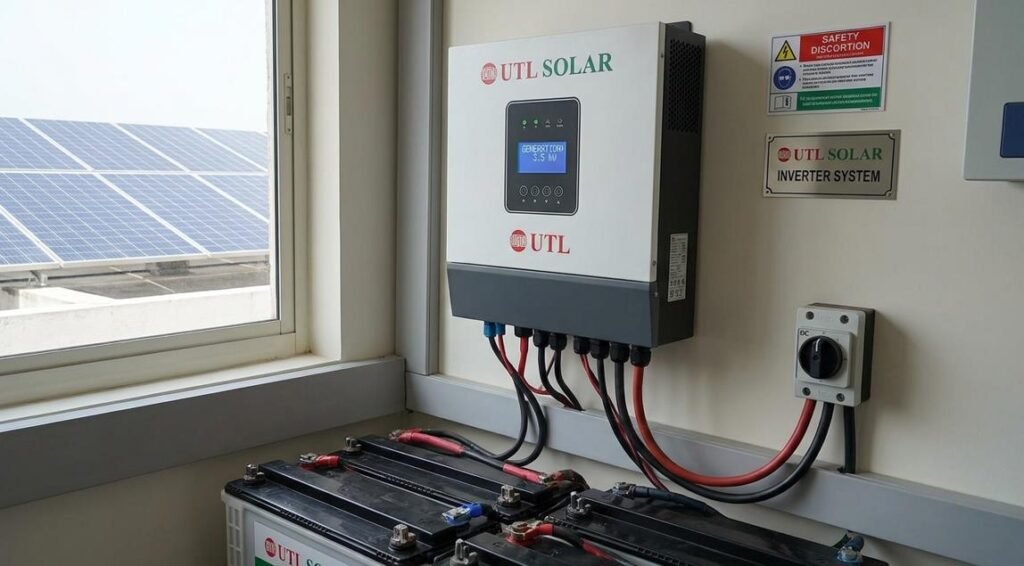

Solar power has become an increasingly practical option for households and businesses that want backup electricity while reducing their dependence on the grid. At the center of most solar power systems is the inverter. It converts and manages electrical energy so that solar panels and batteries can work with household appliances. A utl solar inverter is one option buyers may consider when building a home or small-business solar system. UTL offers different types of solar power products,
Ranging from compact residential units to higher-capacity solar PCUs designed for larger applications.However, choosing an inverter should not be based on brand name alone.The right model depends on your electricity load, battery voltage, solar-panel capacity, backup requirement, and the type of appliances you want to operate. what to consider before choosing a UTL solar inverter and how to select a configuration that fits your requirements.
What Is a UTL Solar Inverter?
A solar inverter is an electrical device that manages power generated by solar panels and converts DC electricity into usable AC electricity for appliances. Depending on the system, it can also charge batteries and coordinate electricity from solar panels, the battery bank, and the utility grid. UTL’s product range includes home inverters and solar PCUs with different technologies and capacities. Its official product information describes features such as sine-wave output, multi-stage charging, battery compatibility, solar charging, and protection systems on various models.
How Does a Solar Inverter Work?
- Solar panels generate DC electricity.
- The solar controller regulates the incoming solar energy.
- Solar energy can power connected loads and/or charge the battery.
- The inverter converts DC battery or solar-system energy into AC electricity.
- Appliances receive usable electrical power.
Why Consider a UTL Solar Inverter?
Different buyers have different reasons for installing solar power. Some want backup during power cuts, while others want to increase solar energy consumption. A UTL solar inverter can be considered when you want a system that combines inverter functionality with solar charging and battery management.The manufacturer’s product range includes systems with different technologies, including PWM, MPPT and rMPPT-based charging configurations.
Solar Charging
One of the biggest advantages of a solar inverter is the ability to charge the battery from solar panels.This can reduce the amount of electricity required from the grid for battery charging, depending on your system configuration and available sunlight.
Battery Backup
A battery-based solar system can provide electricity when grid power is unavailable. The actual backup duration depends on battery capacity and the connected load. For example, a few lights and fans require considerably less energy than a refrigerator, Water pump, computer, air conditioner, and other heavy appliances operating simultaneously.
Power Management
Many solar PCUs can prioritize different power sources according to their configuration. This can make the system more useful in locations where grid electricity is unreliable.
Protection Features
Depending on the model, UTL systems can include protections related to overload, short circuit, battery voltage, input voltage, temperature, and other operating conditions. Exact protections vary by product, so buyers should always verify the specification sheet for the particular model.
Types of UTL Solar Inverters
Not every solar inverter is designed for the same purpose. UTL has offered multiple configurations for residential and larger installations.
Read More:Teach Crusader: Meaning, History, Facts & Legacy
PWM-Based Solar Inverters
PWM, or Pulse Width Modulation, is a common solar charging technology. PWM systems can be suitable for straightforward solar installations where cost and simplicity are important. They can work well when the solar panel and battery configuration is properly matched. However, buyers should not automatically assume that PWM and MPPT products will deliver identical results.
MPPT and RMPPT Solar Inverters
MPPT stands for Maximum Power Point Tracking. It allows the solar controller to adjust operation to extract useful power from solar panels under changing conditions. UTL’s product information includes models using MPPT and rMPPT charging technology. Some documented specifications also list solar charging efficiency above 94% or 95% for particular models. These figures are model-specific rather than a guarantee for every UTL product.
Off-Grid Solar PCUs
Off-grid solar PCUs are designed for systems where batteries play an important role in storing solar energy.They can be useful for homes, shops, rural properties, and other locations where backup power is important.
Higher-Capacity Solar PCUs
For larger electrical loads, UTL has also offered higher-capacity solar PCUs. Published technical material includes systems ranging from smaller residential configurations to multi-kVA and commercial-scale systems.These systems require more careful electrical design and professional installation.
UTL Solar Inverter Features to Compare
Before purchasing, compare the actual specifications rather than selecting a model based only on price.
| Feature | Why It Matters | What to Check |
| Capacity | Determines the amount of load the inverter can support | VA/kVA rating |
| Battery voltage | Must match the battery bank | 12V, 24V, 48V or model-specific voltage |
| Solar technology | Affects solar charging performance | PWM, MPPT or rMPPT |
| Output waveform | Important for appliance compatibility | Pure sine wave where required |
| Solar input | Determines panel compatibility | PV voltage, current and power limits |
| Battery type | Affects charging requirements | Tubular, SMF/GEL, lithium where supported |
| Protection | Helps protect the system | Overload, short circuit, over/under-voltage, temperature |
| Monitoring | Helps track system operation | Display, indicators or optional monitoring |
Capacity and Battery Voltage
Capacity is one of the first specifications to check. A small home with lights, fans, a television, Wi-Fi router and a few electronics may need a very different inverter from a home running pumps, refrigerators or other high-power equipment.Battery voltage is equally important. Some residential systems use 12V batteries, while larger systems may use 24V or 48V configurations. Never select the battery bank independently of the inverter’s specifications.
Solar Charging Technology
If solar generation is a major priority, compare MPPT and PWM options carefully. MPPT systems can provide advantages in extracting available solar power, especially when the panel voltage and battery voltage differ significantly.
Waveform
Pure sine wave output is generally preferable for sensitive electronics and appliances with motors or complex power supplies. Some UTL product specifications list sine-wave output, while the company’s wider inverter range includes different configurations. Therefore, confirm the exact output waveform before purchasing.
Battery Compatibility
Battery chemistry matters because different batteries require different charging profiles. Some UTL solar products are designed to work with tubular and SMF/GEL batteries, while certain models or configurations may support lithium batteries. Compatibility should always be confirmed against the specific model documentation rather than assumed across the entire product range.
Protection and Monitoring
A good inverter should provide appropriate protection against common electrical problems. Depending on the model, features may include overload protection, short-circuit protection, battery high/low protection, input voltage protection, and overheating protection.
UTL Solar Inverter Models and Applications

UTL’s solar portfolio has included products for different use cases. For example, current retail listings show residential units such as the Heliac series and Sun Plus Pro models, as well as larger solar PCUs and three-phase on-grid products.The important point is that there is no single “best” model for everyone. A compact home installation may prioritize affordability, battery backup and simple operation. A larger property may require higher capacity, MPPT charging and more sophisticated monitoring.Commercial installations have different requirements again, including three-phase power, higher PV capacity and professional system design.
How to Choose the Right UTL Solar Inverter
Choosing the right model becomes easier if you follow a few practical steps.
Calculate Your Load
Start by listing the appliances you expect to run from the inverter.For example:
- LED lights
- Ceiling fans
- Television
- Refrigerator
- Wi-Fi router
- Desktop computer
- Water pump
- Other essential appliances
Match the Battery System
Next, determine how much backup you need.A larger battery provides more stored energy, but it also increases cost and charging requirements.Battery selection should consider:
- Required backup time
- Daily energy consumption
- Depth of discharge
- Battery chemistry
- Solar charging capacity
- Inverter voltage
Check Solar Panel Requirements
The inverter must be compatible with your solar array.Check:
- Maximum PV voltage
- Recommended PV power
- Solar charging current
- MPPT operating range
- Panel series/parallel configuration
Consider Future Expansion
If you expect your electricity consumption to increase, buying a system with some reasonable capacity headroom can be useful.However, oversizing excessively can increase the initial cost without providing practical benefits.
UTL Solar Inverter Advantages and Limitations
One potential advantage of the UTL range is the variety of configurations. Buyers can find products aimed at smaller home applications as well as higher-capacity solar systems. Another advantage is the availability of different charging technologies. Depending on the product, buyers can select PWM, MPPT or rMPPT-based systems.However, there are also limitations to consider. First, specifications differ significantly between models. A feature available on one UTL inverter should not automatically be assumed to exist on another.Second, solar performance depends on the complete system, including panel orientation, shading, battery condition, wiring, load profile and local sunlight. Finally, installation quality matters. Incorrect cable sizing, poor connections or unsuitable battery configuration can reduce system performance regardless of inverter brand.
Installation and Maintenance Tips
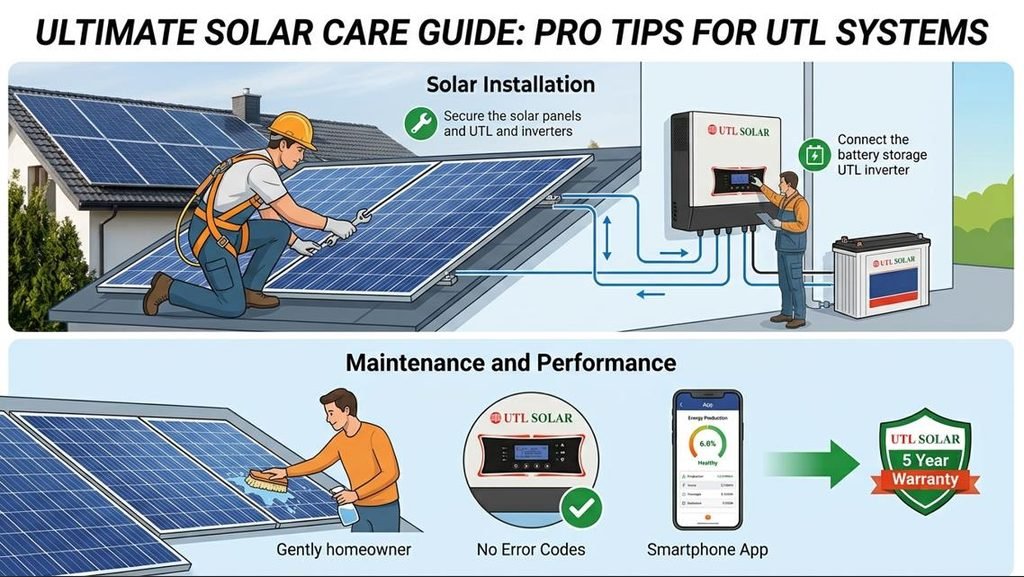
Professional installation is recommended for solar systems, particularly higher-capacity installations.Keep the following points in mind:
Install in a Suitable Location
The inverter should be installed in a clean, dry and adequately ventilated location.Avoid excessive heat, moisture and direct exposure to harsh environmental conditions.
Use Correct Cable Sizes
Undersized cables can cause voltage drops and heat buildup. Cable sizing should be based on current, cable length, installation conditions and applicable electrical standards.
Keep Batteries Properly Maintained
For lead-acid batteries, maintenance requirements vary by battery type. Follow the battery manufacturer’s instructions. Lithium batteries require compatible charging and battery-management arrangements.
Monitor Performance
Check battery voltage, solar charging, load levels and system alarms when your inverter provides these readings. Early identification of abnormal behavior can help prevent larger problems.
Is a UTL Solar Inverter Suitable for Your Home?
For many residential applications, a UTL solar inverter can be a practical option when the selected model correctly matches the home’s electrical load, battery bank and solar array.The best approach is not to choose a model simply because it has the highest capacity or the lowest price.
Instead, compare:
- Your daily electricity usage
- Required backup duration
- Appliance startup requirements
- Battery type and voltage
- Solar panel capacity
- Charging technology
- Available protection features
- Installation and service support
- Warranty terms
- Total system cost
Final Thoughts
A utl solar inverter can be a useful part of a residential or commercial solar power system, but the right choice depends on the complete electrical setup rather than the brand name alone. Before buying, calculate your actual load, decide how much battery backup you need, check solar-panel compatibility, and compare MPPT or PWM charging technology. Also verify the exact specifications of the model you intend to purchase because UTL’s range includes products with different capacities, features and operating configurations.
For a small home, simplicity and reliable backup may be the priority. For a larger solar installation, PV capacity, battery voltage, efficiency, monitoring and professional system design become increasingly important. A well-matched inverter, properly sized battery, suitable solar array and quality installation will ultimately have a much greater effect on your solar system’s performance than choosing a product based on price alone.
FAQs
Q1: What is a UTL solar inverter?
Ans: A UTL solar inverter is a power-conversion and management device designed for solar-energy systems. Depending on the model, it can manage solar charging, battery backup, grid input and AC power for connected appliances.
Q2: Is a UTL solar inverter suitable for home use?
Ans: Yes, UTL offers solar inverter and solar PCU configurations intended for residential applications. The correct choice depends on your load, battery voltage, solar-panel capacity and required backup time.
Q3: Does UTL offer MPPT solar inverters?
Ans: Yes. UTL’s product information includes solar systems using MPPT and rMPPT charging technologies. However, the exact technology depends on the selected model.
Q4: Can a UTL solar inverter work with a battery?
Ans: Many UTL solar inverter and PCU systems are designed around battery storage. Battery voltage and chemistry compatibility vary by model, so check the manufacturer’s specification before purchasing.
Q5: Is MPPT better than PWM for a solar inverter?
Ans: MPPT can offer better solar-energy harvesting in many system configurations, particularly when panel voltage differs substantially from battery voltage. PWM can still be suitable for simpler, properly matched systems.
Q6: How do I select the capacity of a UTL solar inverter?
Ans: Calculate the appliances you need to run simultaneously, consider motor startup loads, and then select an inverter with suitable capacity. Battery capacity and solar-panel size should be matched to the same system.
Q7: Can a UTL solar inverter run a refrigerator?
Ans: It can, provided the selected inverter has sufficient continuous and surge capacity and the refrigerator is compatible with the inverter’s output. Refrigerator startup demand should be considered during sizing.