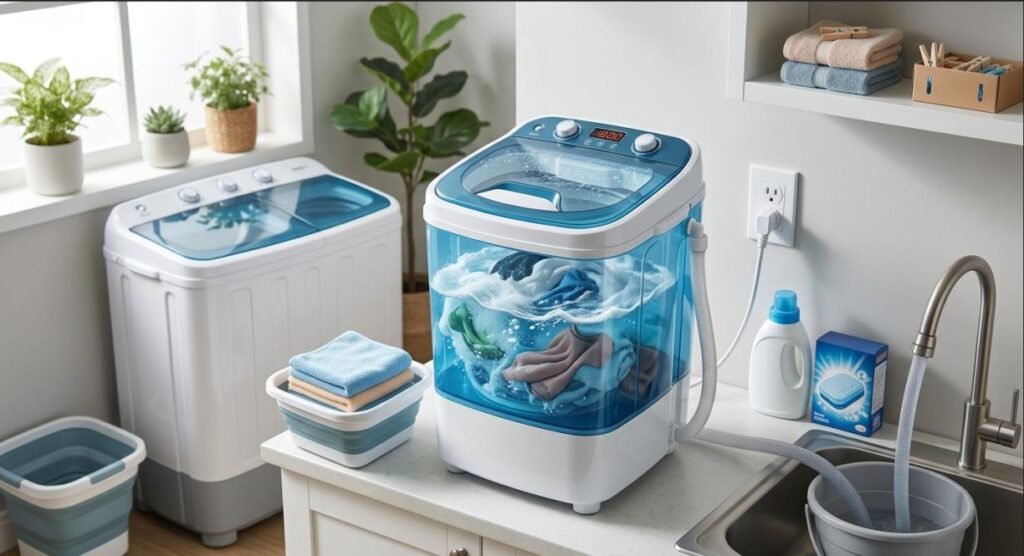

A mini washing machine is a compact laundry appliance designed to wash relatively small amounts of clothing while taking up much less space than a conventional washing machine.Unlike full-size washers designed for family-sized laundry loads, mini models are generally aimed at people who wash smaller quantities of clothes. They can be particularly useful in apartments, dorm rooms, small homes, RVs, guest rooms, or other places where space is limited.
The exact design varies considerably. Some models are simple portable washers with manual water filling, while others have automatic controls, multiple wash programs, and a separate spin compartment.The most important point is that a mini washing machine is not simply a smaller version of every feature found in a full-size washer.
Capacity, washing power, drying ability, and convenience can differ from model to model. Choosing the right one therefore depends on how often you do laundry and what types of clothes you normally wash.
Why Choose a Mini Washing Machine?
A compact washer can solve several everyday laundry problems, especially when installing a traditional appliance is difficult.
Read More: Consolemagazine com: Gaming News, Reviews, Tips & Tech Updates
Saves Space
Space is one of the biggest advantages.A conventional washing machine can require a dedicated area with appropriate water connections and drainage. A compact model may fit into a smaller utility area, bathroom, kitchen corner, or other suitable location depending on the manufacturer’s installation requirements.For renters and people living in small apartments, this flexibility can make laundry much easier.
Uses Less Water for Small Loads
Washing a few shirts in a large-capacity machine can sometimes mean using more resources than necessary for the amount of laundry involved.A mini washer is designed around smaller loads, although actual water consumption depends on its capacity, design, selected cycle, and how the appliance is filled.This makes compact washers particularly practical for people who prefer washing small batches rather than waiting until they have a large pile of clothes.
Convenient for Frequent Washing
A mini washing machine can be useful when you want to wash clothes frequently.For example, someone may prefer to wash gym clothes, baby clothes, underwear, or lightly worn garments separately rather than combining them with a large weekly load. Because the machine handles smaller loads, it can encourage more frequent laundry routines.
How Does a Mini Washing Machine Work?
The basic washing process is similar to that of a traditional washer.Clothes are placed inside the washing compartment, followed by an appropriate amount of detergent and water. The machine agitates or rotates the clothes to loosen dirt. After washing, the dirty water is drained.Depending on the model, the clothes may then go through a rinse cycle and a separate spin cycle. Some portable washers have two tubs: one for washing and another for spinning. In these machines, you normally move the clothes from the wash tub to the spin tub manually.
Other models operate more automatically and can handle washing, rinsing, and spinning through programmed cycles.Before using any model, it is important to read its instructions because water connections, detergent recommendations, load limits, and drainage methods can vary.
Types of Mini Washing Machines
Not every compact washer is built for the same purpose. Understanding the major types can make comparison easier.
Portable Single-Tub Models
Single-tub machines combine the main washing functions into one compartment.They are often relatively simple to operate and can be a practical option when portability is a priority. Some require manual water filling and draining, while others have more convenient connections.These models are suitable for users who want a basic washing solution without installing a full-size appliance.
Twin-Tub Models
Twin-tub machines typically have separate compartments for washing and spinning.One tub handles washing, while the second extracts water from clothing through a spin cycle. You generally transfer garments manually between the two sections.The advantage is that washing and spinning can happen as separate steps, which can be useful when processing several small loads.
Compact Automatic Models
Compact automatic washers are closer to traditional washing machines in operation.Depending on the model, they may automatically control water levels, washing programs, rinsing, and spinning. They tend to offer greater convenience but can cost more and may require more specific installation conditions.They are worth considering if you want compact dimensions without giving up as much automation.
Portable Washers for Specialized Use
Some compact washing appliances are designed for very specific needs, such as washing a few garments while traveling or handling delicate items.These can be extremely convenient for occasional use, but their limited capacity means they are not necessarily a substitute for a household washing machine.
Important Features to Consider
The right mini washing machine should match your actual laundry routine rather than simply having the highest number of features.
| Feature | Why It Matters | What to Consider |
| Capacity | Determines how much laundry you can wash at once | Match it to your typical load size |
| Spin function | Removes water after washing | Useful for reducing drying time |
| Wash programs | Controls how different fabrics are treated | Look for settings you will actually use |
| Water system | Affects installation and convenience | Check whether filling is manual or automatic |
| Drainage | Determines where wastewater goes | Make sure the hose can reach a suitable drain |
| Size and weight | Affects storage and portability | Measure your available space first |
| Build quality | Influences long-term usability | Check materials, construction, and reviews |
| Noise level | Important in apartments or shared spaces | Check manufacturer specifications and user feedback |
Washing Capacity
Capacity should be one of your first considerations.A very small washer may be convenient but could require several cycles if you regularly wash towels, jeans, bedding, or larger garments.On the other hand, buying a machine much larger than your typical laundry needs may reduce some of the space and portability advantages you’re looking for.Think about the largest load you expect to wash regularly before choosing a capacity.
Spin and Drying Performance
Washing and drying are not the same thing.Many portable machines have a spin function that removes excess water but do not completely dry clothes. This means you may still need to hang the garments or use another drying method.If faster drying is important, pay close attention to the spin specifications rather than assuming that every mini washer includes a powerful dryer.
Water Supply and Drainage
Check how the machine receives and removes water.Some portable models allow you to add water manually, while others connect to a water supply. Drainage may require a hose positioned over a sink, drain, or other suitable outlet.These details can have a major effect on everyday convenience, so they should be considered before buying.
Controls and Wash Programs
Simple controls are often an advantage on compact appliances.Depending on the model, you may find basic wash timers, separate wash and spin controls, or preset programs for different fabrics.More programs are not automatically better. Choose settings that correspond to the clothes you actually wash.
Build Quality and Portability
If you plan to move the washer frequently, weight and handles become important. A machine that is technically portable but difficult to lift or store may not be convenient in Practice. Also consider the construction of the body, lid, control panel, hoses, and other frequently handled components.
Mini Washing Machine vs. Full-Size Washing Machine
A full-size washing machine generally provides greater capacity and is more suitable for households with large laundry loads.A mini washer, by comparison, prioritizes compactness and convenience.The better option depends on your circumstances. A person living alone in a small apartment may value portability more than maximum capacity. A larger household that washes bedding, towels, and clothes together will probably benefit more from a conventional washer.Another difference is installation. Some portable models are easier to set up temporarily, while traditional machines commonly require a more permanent location with suitable plumbing and drainage.
Who Should Use a Mini Washing Machine?
A compact washer can be a good fit for several types of users.
Apartment residents: Limited floor space can make a compact appliance more practical.
Students: A small washer can be useful when access to shared laundry facilities is inconvenient.
Single-person households: Smaller loads can make a compact washer more appropriate than a large-capacity appliance.
Travelers and RV users: Portable designs can be useful where conventional laundry facilities are unavailable.
People washing specialized loads: A small machine can handle items that you prefer to wash separately.
However, a mini washing machine may not be ideal if you regularly wash large loads or need strong drying performance.
How to Use a Mini Washing Machine Properly
Using the machine correctly can improve washing results and reduce unnecessary wear.Start by checking the manufacturer’s maximum load. Avoid filling the tub beyond its recommended capacity because overcrowding can prevent clothes from moving properly.Separate garments according to color and fabric requirements. Use an appropriate amount of detergent rather than assuming more detergent means cleaner clothes. Add water according to the machine’s instructions, select the appropriate cycle, and allow the washer to complete the wash.After washing, drain the dirty water and Rinse the clothes as directed. If your machine has a separate spin compartment, distribute the garments evenly before starting the spin cycle.Finally, remove the clothes promptly and allow them to dry properly.
How to Maintain a Mini Washing Machine
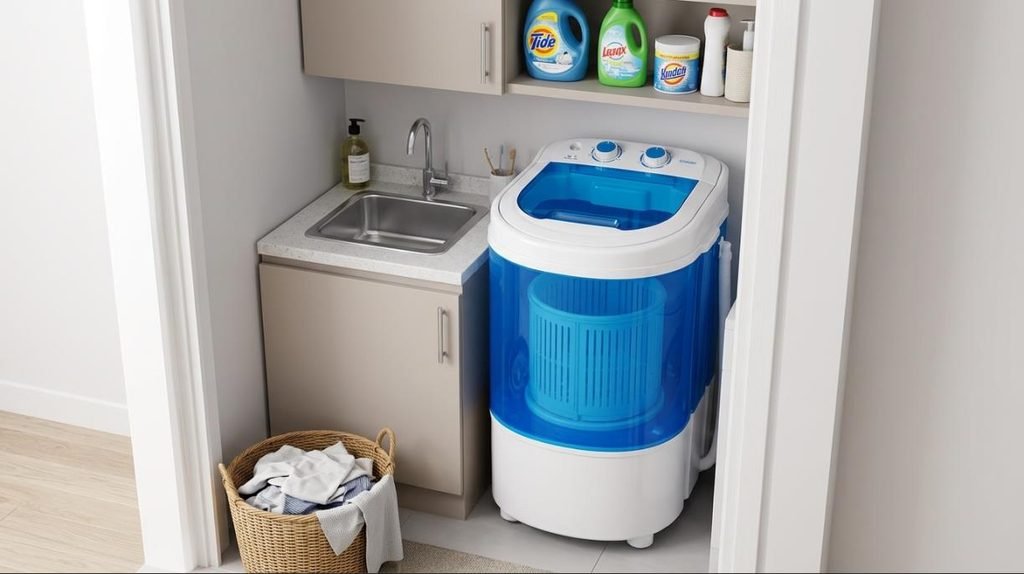
Regular maintenance can help keep a compact washer working efficiently.After each use, remove leftover clothing and allow the interior to dry. Leaving the lid or door slightly open when appropriate can help reduce trapped moisture.Clean detergent residue and inspect the washing area regularly. Check hoses for leaks, cracks, or loose connections.If the machine has a lint filter, clean it according to the manufacturer’s recommendations.You should also avoid storing the appliance while it is wet. A clean and dry machine is less likely to develop unpleasant odors.Always disconnect the appliance from power before carrying out maintenance that requires access to internal or electrical components.
Are Mini Washing Machines Worth It?
For the right user, a mini washing machine can be a very practical investment.Its strongest advantage is convenience in situations where a traditional washing machine is too large, expensive to install, or simply unnecessary.However, it is important to have realistic expectations. A compact washer may require smaller loads, manual water handling, clothes transfer between tubs, or longer overall laundry routines depending on the design.The question is not whether a mini washer is universally better than a full-size machine. Instead, consider whether its capacity, portability, installation requirements, and washing performance match your lifestyle.If you primarily wash small loads and have limited space, the advantages can outweigh the compromises.
What to Check Before Buying
Before purchasing a mini washing machine, make a short checklist.First, measure the available space. Don’t forget to account for the space needed to open the lid or door and access hoses.Next, consider your normal laundry load. If you frequently wash heavy garments, towels, or bedding, make sure the capacity is adequate.Check whether the machine has a spin function and determine how much water it can extract from clothes.Also verify how water enters the appliance and where wastewater must be discharged.Finally, consider warranty coverage, replacement parts, customer support, product reviews, and the manufacturer’s instructions.A low purchase price can be less attractive if replacement components are difficult to obtain or the machine doesn’t suit your actual laundry needs.
Final Thoughts
Mini washing machine can make laundry considerably easier when space, portability, or small load sizes are the main concerns. It can be especially useful for people living in compact homes, apartments, dorms, RVs, or other places where a full-size washer isn’t practical.The best choice isn’t necessarily the smallest or cheapest model.
Pay attention to washing capacity, spin performance, water handling, drainage, controls, dimensions, construction quality, and warranty support.Most importantly, choose a machine that fits the way you actually do laundry. If you regularly wash small loads and value convenience, a compact washer can be a useful addition to your home.
FAQs about mini washing machine
Q1: Is a mini washing machine suitable for everyday use?
Ans: Yes. Many mini washing machines are suitable for regular small loads, provided you stay within the manufacturer’s recommended capacity and use the appliance correctly.
Q2: Can a mini washing machine wash jeans and towels?
Ans: Some models can wash heavier garments, but capacity and motor performance vary. Check the manufacturer’s load recommendations before washing bulky or heavy items.
Q3: Does a mini washing machine completely dry clothes?
Ans: Usually, no. Models with a spin function can remove a significant amount of excess water, but clothes generally still need to air-dry unless the appliance specifically includes a drying function.
Q4: How much electricity does a mini washing machine use?
Ans: Electricity consumption varies by model, motor, cycle length, and usage. A compact washer may use less energy than a larger machine for a comparable small load, but you should check the manufacturer’s specifications for the actual appliance.
Q5: Can I use a mini washing machine in an apartment?
Ans: Yes, many compact washers are designed for situations where space is limited. Before using one, make sure the location has a safe power supply and an appropriate method for adding and draining water.
Q6: Can I wash delicate clothes in a mini washer?
Ans: It depends on the model and its available cycles. Always check the garment’s care label and choose a gentle setting when the machine provides one.
Q7: Do mini washing machines need plumbing?
Ans: Not necessarily. Some portable models can be manually filled and drained, while others connect to water supplies. Check the installation requirements of the specific machine before purchasing.



Pingback: iimjobs: A Practical Guide to MBA, Management & Professional Jobs in India
Pingback: SAP Concur Login: How to Sign In, Use SSO and Fix Access Issues