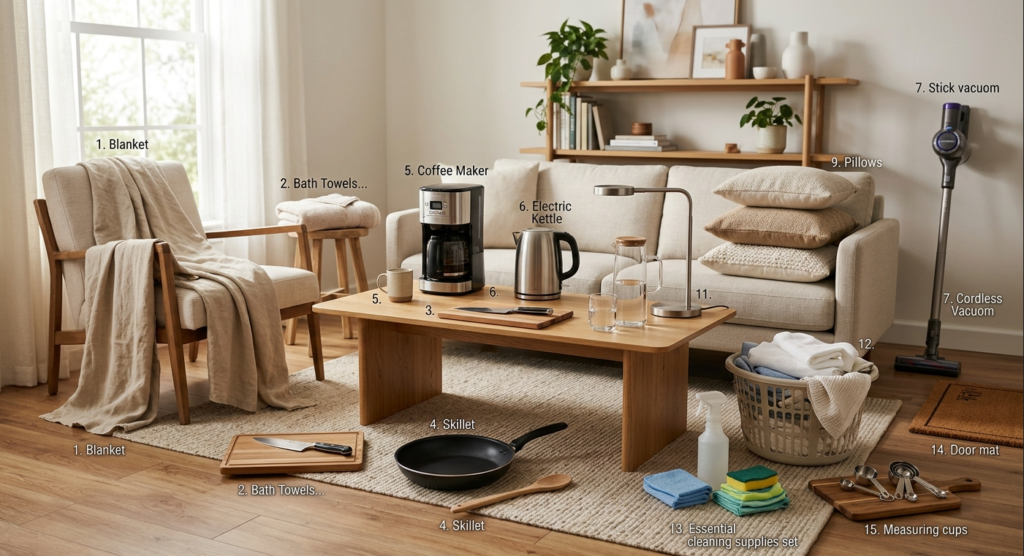

Setting up a home can quickly become overwhelming. With countless products competing for attention, it is easy to overspend on things you rarely use while overlooking everyday necessities. The solution is to focus on practical, reliable items that improve comfort, organization, safety, and convenience.
This article highlights 15 home essentials every household should consider, explains why each one matters, and helps you decide what to buy first. The goal is simple: create a functional home without unnecessary clutter or spending.
What Are Home Essentials?
Home essentials are practical household items that support basic daily living. They can include bedding, cookware, cleaning equipment, bathroom supplies, storage products, tools, lighting, and safety equipment. The exact list differs from household to household.
A person living alone in a furnished apartment will need fewer things than a family moving into an unfurnished house. Likewise, renters may not need products such as drills or outdoor maintenance equipment if their landlord handles repairs.
The key is to think in terms of function rather than quantity.
Before buying something, ask:
- Will I use it regularly?
- Does it solve a genuine problem?
- Is it durable enough for its expected use?
- Can one product perform several jobs?
- Do I already own something that does the same thing?
The 15 Must-Have Home Essentials
The following list focuses on categories that provide the greatest practical value for most households.
Read More: Prestige Skytech Price; Floor Plans, Amenities & Location (2026 Guide)
1. Comfortable Bedding
Good sleep starts with a comfortable and hygienic bed. At minimum, you should have a suitable mattress, pillows, fitted sheets, a blanket or comforter, and a mattress protector. If your budget is limited, prioritize the mattress and pillows before decorative bedding. A mattress protector is also a smart purchase because it helps protect the mattress from spills, stains, and everyday wear.
Practical tip: Choose breathable bedding appropriate for your climate. In hot or humid environments, lightweight cotton or other breathable fabrics can be more comfortable than heavy materials.
2. A Basic Cookware Set
You do not need a kitchen filled with specialized equipment to prepare everyday meals. A practical starter collection can include:
- One frying pan
- One medium saucepan
- One larger cooking pot
- A spatula
- A wooden or heat-resistant spoon
- Tongs
- A colander
- Measuring cups and spoons
3. A Reliable Kitchen Knife and Cutting Board
A decent kitchen knife is one of the most useful tools in a home. You do not necessarily need a large knife block. A good chef’s knife or versatile all-purpose knife, paired with a stable cutting board, can handle many everyday preparation tasks.
Look for:
- A comfortable handle
- A blade appropriate for your cooking style
- A cutting board that does not slide easily
- Enough workspace for safe food preparation
4. Food Storage Containers
Food storage containers are small purchases that can have a major effect on kitchen organization. They help with leftovers, meal preparation, pantry organization, and reducing unnecessary food waste. When choosing containers, consider:
- Stackability
- Leak resistance
- Ease of cleaning
- Appropriate size
- Whether the material suits your intended use
5. Basic Cleaning Supplies
A clean home does not require a cabinet full of specialized chemicals. A practical cleaning kit can include microfiber cloths, a broom and dustpan, a mop, suitable surface cleaner, bathroom cleaner, sponges, cleaning brushes, rubber gloves, and garbage bags. A vacuum cleaner can be valuable if your floors, rugs, or household needs justify one. Many new-home lists include cleaning supplies among the first purchases because cleaning is immediately necessary after moving.
Expert-style buying rule: Purchase cleaning equipment according to the surfaces in your home. Someone with mostly hard floors has different requirements from someone with wall-to-wall carpeting. Also avoid mixing cleaning chemicals unless the product labels specifically indicate that doing so is safe.
6. Bathroom Basics
Bathrooms quickly become uncomfortable when a few simple items are missing.
Your bathroom starter kit should include:
- Bath and hand towels
- Hand soap
- Toilet paper
- Bath mat
- Shower curtain or appropriate enclosure accessories
- Toilet brush
- Plunger
- Small waste bin
- Basic toiletries
7. A Laundry Setup
Laundry becomes much easier when everything has a designated place. Useful items include a laundry hamper, detergent, stain-treatment product, drying rack or suitable clothesline, and basic ironing equipment if you regularly wear clothes that need pressing. You do not necessarily need a large collection of laundry products. Start with the detergent and equipment required by your washing method.
If you use a washing machine, follow its care instructions rather than assuming that more detergent means cleaner clothes. Correct dosing can help prevent residue and unnecessary product use.
8. Storage and Organization Solutions
One of the biggest mistakes when furnishing a home is buying storage products before understanding what actually needs to be stored.Instead, live in the space for a while and observe where clutter accumulates.Then consider:
- Drawer organizers
- Baskets
- Shelving
- Under-bed containers
- Closet organizers
- Hooks
- Multipurpose cabinets
9. Reliable Lighting
Lighting affects both comfort and functionality. Every frequently used room should have adequate general lighting, while areas such as desks, bedside tables, kitchen worktops, and reading spaces may benefit from task lighting. Useful lighting products include:
- LED bulbs
- Table lamps
- Floor lamps
- Night lights
- Rechargeable or battery-powered lights for emergencies
10. A Basic Tool Kit
A small tool kit can save time and money when ordinary household problems appear. A useful starter kit might contain:
- Screwdrivers
- Hammer
- Pliers
- Adjustable wrench
- Measuring tape
- Utility knife
- Allen keys
- Level
- A selection of basic fasteners
Practical example: Hanging a picture, tightening a loose screw, assembling furniture, or measuring a space are all tasks where a basic kit immediately pays for itself.
11. First Aid Supplies
A first aid kit is one of those purchases that may sit unused for months—but becomes extremely valuable when a minor injury occurs. A basic kit may contain adhesive bandages, sterile gauze, antiseptic supplies, disposable gloves, medical tape, scissors, and other appropriate first aid items. Check the contents periodically and replace expired or depleted supplies.
Medication should be stored responsibly and according to label instructions. If household members have specific medical needs, the contents of the first aid kit should be adapted accordingly.
12. Fire and Home Safety Equipment
Safety equipment should never be treated as optional decoration. Depending on the property and local requirements, important equipment can include smoke alarms, carbon monoxide alarms where applicable, an appropriate fire extinguisher, flashlights, and emergency supplies. For homeowners, it is also useful to know where the main water shutoff, electrical breaker panel, and other critical controls are located.
Recent preparedness guidance increasingly emphasizes fire extinguishers, emergency lighting, water-leak detection, communication equipment, and basic emergency supplies rather than focusing solely on furniture and décor.
13. Trash and Recycling Bins
Waste management is easy to overlook until the first overflowing garbage bag. At minimum, most households need a kitchen waste bin and smaller bins for bathrooms or work areas. Your setup should reflect the waste and recycling rules in your area. Choose bins based on:
- Household size
- Available floor space
- Cleaning convenience
- Odor control
- Local recycling requirements
14. Multipurpose Furniture
Furniture should make your home easier to live in, not simply fill empty rooms. For smaller homes, multipurpose pieces can be particularly valuable:
- Storage ottomans
- Foldable tables
- Sofa beds
- Shelving units
- Beds with under-bed storage
- Nesting tables
15. Everyday Comfort and Utility Items
The final category includes small products that improve daily routines. Depending on your household, these might include:
- Extension cords or suitable power strips
- Phone chargers
- Coat hooks
- Curtains or privacy coverings
- Reusable shopping bags
- Water bottles
- A small step stool
- Extra batteries
- Basic stationery
- A clock
A Practical Priority System for Buying Home Essentials
Instead of buying everything in one shopping trip, divide purchases into three levels.
| Priority | What to Buy | Why It Matters | Example |
| Buy First | Bedding, bathroom basics, cleaning supplies, basic cookware, lighting, safety equipment | Needed immediately for daily living and safety | Sheets, towels, cookware, flashlight |
| Buy Soon | Storage, tools, laundry equipment, additional kitchen items | Improves convenience and organization | Tool kit, drying rack, storage bins |
| Buy Later | Decorative items, specialty appliances, premium furniture | Useful but usually not urgent | Wall art, smart gadgets, accent furniture |
How to Choose Quality Without Overspending
Price alone is a poor measure of quality. For frequently used products, consider durability, repairability, warranty coverage, material quality, ease of maintenance, and replacement cost.
For example, spending slightly more on a frequently used frying pan may make sense if it lasts substantially longer. Conversely, buying a premium decorative object that serves no practical purpose may not be the best use of a limited budget.
Home Essentials for Renters vs. Homeowners
Not every household needs the same equipment.
Renters
Renters may prioritize:
- Portable storage
- Removable hooks
- Basic cleaning equipment
- Compact tools
- Emergency lighting
- Kitchen and bathroom supplies
Homeowners
Homeowners may benefit from expanding their toolkit with:
- A drill
- Stud finder
- Ladder or appropriate step equipment
- Leak sensors
- Garden tools where applicable
- More extensive maintenance supplies
How to Avoid Buying Too Much
The modern home can easily become crowded with products that promise convenience. Before buying another gadget, ask whether it:
- Solves a recurring problem.
- Saves meaningful time.
- Replaces several less useful items.
- Is easy to clean and maintain.
- Will still be useful a year from now.
A Simple First-Week Setup Plan
If you have just moved, do not try to finish the entire home immediately.

Day One
Prioritize:
- Bedding
- Towels
- Toilet paper
- Soap
- Basic lighting
- Drinking water
- Simple food
- Chargers
- Cleaning supplies
- Basic safety equipment
First Few Days
Add:
- Cookware
- Food storage
- Laundry supplies
- Trash bins
- Basic tools
- Additional lighting
First Few Weeks
Then evaluate:
- Storage problems
- Furniture gaps
- Organization
- Décor
- Specialty appliances
- Long-term upgrades
How to Build a More Sustainable Home
Buying fewer, better products can reduce unnecessary waste. Choose reusable items where they make sense, repair products when practical, and avoid purchasing something simply because it is currently fashionable. For furniture and other long-lived products, construction quality and material durability can matter more than trends. The current “buy it for life” approach emphasizes longevity and reducing replacement cycles.
You can also consider secondhand furniture, refurbished products, or locally made goods when quality and safety can be verified.Sustainability does not mean every product must be expensive or premium. It often means buying thoughtfully and using what you own for longer.
Final Thoughts
The best home essentials are the products that quietly make daily life easier. They help you sleep comfortably, prepare meals, clean efficiently, stay organized, handle small repairs, and respond to unexpected situations. You do not need to furnish an entire home overnight. Start with safety and basic daily needs, then add products according to the way your household actually functions.
The strongest shopping strategy is simple: buy for your lifestyle, measure before purchasing, prioritize durability for frequently used products, and leave decorative extras until the fundamentals are covered. A well-equipped home is not necessarily the one with the most possessions. It is the one where the right things are easy to find, useful when needed, and appropriate for the people who live there.
FAQs about home essentials
Q1: What are the most important home essentials?
Ans: Bedding, cookware, cleaning supplies, bathroom items, lighting, basic tools, storage products, and safety equipment are essential for most homes.
Q2: What should I buy first when moving into a new home?
Ans: Start with bedding, towels, toiletries, cleaning supplies, lighting, basic kitchen items, food, and essential safety equipment.
Q3: How much should I spend on home essentials?
Ans: Set a budget based on your household needs, prioritize necessities, and postpone decorative or specialty items until later.
Q4: What kitchen items does every home need?
Ans: Every kitchen benefits from cookware, knives, cutting boards, utensils, dinnerware, food containers, and basic cleaning supplies.
Q5: Which home essentials are worth spending more on?
Ans: Spend more on frequently used, durable products such as mattresses, cookware, furniture, and quality tools that provide long-term value.
Q6: What safety items should every home have?
Ans: Important safety items include smoke alarms, appropriate carbon monoxide alarms, fire-safety equipment, first aid supplies, and emergency lighting.
Q7: Do renters need a tool kit?
Ans: Yes. A basic tool kit helps renters assemble furniture, tighten screws, measure spaces, and handle simple household tasks.
Q8: How can I save money when buying household essentials?
Ans: Prioritize necessities, choose multipurpose products, compare durability, buy gradually, and avoid purchasing unnecessary gadgets or decorative items.
Q9: How do I know whether an item is really essential?
Ans: Consider whether it solves a recurring problem, supports daily living, improves safety, or provides practical value for your household.