

Wellhealthorganic is a health and wellness-focused platform covering subjects such as nutrition, fitness, home remedies, Ayurveda, skincare, beauty, and lifestyle. Its content can be useful for people looking for practical ideas for healthier living, but health information is most valuable when traditional wellness advice is separated from claims supported by scientific evidence.
A healthier lifestyle does not require extreme diets, expensive products, or complicated routines. The strongest foundation is much simpler: eat a varied diet, stay physically active, sleep adequately, avoid tobacco, manage stress, maintain social connections, and seek professional healthcare when necessary.
The World Health Organization (WHO) describes these kinds of lifestyle choices as important parts of self-care.how to approach natural health and wellness responsibly, including nutrition, exercise, weight management, traditional remedies, and everyday habits.
Read More: Bluestock Fintech Internship: Roles, Skills, Eligibility, Opportunities & How to Apply
What Is Wellhealthorganic?
Wellhealthorganic publishes content focused on general health and wellness, including natural remedies, Ayurveda, fitness, nutrition, skincare, and lifestyle topics. Its home-remedy content, for example, discusses traditional Ayurvedic approaches and household ingredients for various everyday concerns.
However, readers should distinguish between information about a traditional practice and evidence that the practice treats a medical condition. A remedy being traditionally used does not automatically establish that it is effective or safe for every person.
What topics does Wellhealthorganic cover?
The site’s content can broadly be grouped into:
- Nutrition and healthy eating
- Fitness and physical activity
- Natural and home remedies
- Ayurveda and traditional wellness
- Skincare and beauty
- General lifestyle and self-care
Who can benefit from Wellhealthorganic content?
General wellness information may be useful for people who want ideas for improving everyday habits, eating patterns, activity levels, or self-care routines. It can also help readers generate questions to discuss with qualified healthcare professionals. It should not, however, be treated as a substitute for diagnosis, prescription treatment, or individualized medical advice.
How should you evaluate online health information?
Before acting on a health recommendation, ask:
- Who made the claim?
- What evidence supports it?
- Is the evidence from human studies or only laboratory or animal research?
- Could the recommendation interact with medicines?
- Does the advice apply to your particular situation?
- Does the source acknowledge limitations and potential risks?
What Does a Healthy Lifestyle Really Mean?
A healthy lifestyle is not one specific diet or exercise program. It is a collection of sustainable behaviors that support physical and mental well-being. WHO identifies healthy eating, physical activity, avoiding tobacco, avoiding alcohol, getting enough sleep, and maintaining social connections as important lifestyle elements of self-care.
Healthy eating
A healthy diet should provide enough nutrients without excessive amounts of energy, salt, free sugars, or unhealthy fats. WHO describes four broad principles of a healthy diet: adequacy, balance, moderation, and diversity. The organization also emphasizes food safety and recommends diets based largely on minimally processed or unprocessed foods.
Regular physical activity
Movement is another major part of healthy living. Walking, cycling, swimming, recreational sports, household activities, and structured workouts can all contribute to physical activity. Regular activity can support cardiovascular health, muscle and bone strength, sleep, mental well-being, and healthy weight management.
Sleep and recovery
Exercise and nutrition are only part of the picture. Adequate sleep supports overall health, while insufficient or poor-quality sleep can make healthy routines more difficult to maintain. A practical approach is to establish a consistent sleep schedule and create an evening routine that makes restful sleep easier.
Mental and social well-being
Health is not limited to physical measurements. Stress management, meaningful relationships, recreation, and appropriate professional support can also contribute to well-being. Self-care should complement healthcare rather than replace it. WHO specifically notes that self-care does not eliminate the need for health systems or health workers.
Wellhealthorganic Nutrition Tips for Everyday Health
Nutrition is one of the most important areas of healthy living because the quality of a person’s overall eating pattern matters more than any single food. WHO states that healthy diets can help protect against malnutrition and reduce the risk of several noncommunicable diseases, including cardiovascular disease, diabetes, stroke, and some cancers.
Build meals around nutritious foods
A practical eating pattern can include:
- Vegetables and fruits
- Whole grains
- Beans and other pulses
- Nuts and seeds where appropriate
- Fish, eggs, dairy, poultry, or other suitable protein sources
- Healthy sources of unsaturated fats
Why dietary variety matters
No single food provides every nutrient the body needs. Eating a range of foods makes it easier to obtain protein, fiber, vitamins, minerals, and other nutrients. The best diet also depends on age, activity level, culture, locally available foods, health status, and personal dietary needs. WHO notes that healthy diets can look different across individuals and cultures while still following the same fundamental principles.
How much fruit and vegetables should you eat?
WHO recommends that people older than 10 aim for at least 400 grams of fruits and vegetables per day, alongside adequate dietary fiber. The exact foods and portions can vary according to individual circumstances. Rather than treating this as a rigid rule for every meal, think of it as a practical target that encourages greater variety and regular consumption of plant foods.
Choose better carbohydrate sources
Carbohydrates are not inherently unhealthy. WHO recommends obtaining carbohydrates primarily from foods such as whole grains, vegetables, fruits, and pulses. For many people, replacing some refined carbohydrate foods with whole grains, beans, Ientils, vegetables, or fruit is a more useful strategy than eliminating carbohydrates altogether.
Limit excess sugar, salt, and unhealthy fats
Healthy eating is also about what you consume less frequently or in smaller quantities. Pay attention to foods and drinks that contain large amounts of free or added sugars, sodium, saturated fat, and industrial trans fat. WHO recommends limiting these components as part of a healthy dietary pattern.
Think about overall dietary quality
One meal does not determine whether a diet is healthy. A more useful approach is to evaluate the overall pattern across days and weeks. This avoids unnecessary fear around individual foods while encouraging consistent, nutritious choices.
Wellhealthorganic Fitness Tips for a More Active Lifestyle

Physical activity is one of the most reliable ways to support overall health. CDC reports that regular physical activity can improve brain health, strengthen bones and muscles, improve sleep, reduce high blood pressure, and lower the risk of conditions including heart disease and type 2 diabetes.
How much physical activity do adults need?
For adults, WHO recommends approximately:
| Activity target | General recommendation |
| Moderate aerobic activity | 150–300 minutes per week |
| Vigorous aerobic activity | 75–150 minutes per week |
| Muscle-strengthening | At least 2 days per week |
| Combination | An equivalent mix of moderate and vigorous activity |
Simple ways to become more active
You do not necessarily need a gym membership.Try:
- Walking during breaks
- Taking stairs when practical
- Cycling for short journeys
- Gardening
- Household activities
- Recreational sports
- Short movement breaks during long periods of sitting
Strength training for general fitness
Strength exercises can include bodyweight movements, resistance bands, free weights, or machines. A basic routine can focus on major muscle groups while giving the body adequate recovery time. Beginners should prioritize proper technique and manageable resistance rather than attempting advanced exercises immediately.
Natural Wellness Habits That Can Fit Into Daily Life
The word “natural” is appealing, but a healthy natural lifestyle does not have to involve special products.
Start with small, sustainable changes
Instead of changing everything simultaneously, select one or two habits. For example:
- Add a serving of vegetables to one meal.
- Walk for 20–30 minutes.
- Replace a sugary drink with water.
- Establish a consistent bedtime.
- Prepare more meals at home.
- Take regular movement breaks.
Stay adequately hydrated
Water is essential for normal body functions. Hydration needs vary according to factors such as climate, activity, diet, and individual circumstances. There is no need to rely on special “detox” drinks to maintain normal hydration. Ordinary safe drinking water can meet hydration needs for many people.
Reduce tobacco exposure
Avoiding tobacco is an important component of a healthier lifestyle. People who want to stop using tobacco can benefit from evidence-based cessation support rather than relying exclusively on unproven natural remedies.
Make healthy choices realistic
A good routine should fit your budget, culture, schedule, food availability, and physical abilities.The most effective lifestyle is generally not the most complicated one. It is the one you can follow consistently.
Wellhealthorganic and Traditional Wellness Practices
Traditional health practices can have cultural and historical importance, but their evidence should be evaluated individually.
What is Ayurveda?
Ayurveda is a traditional Indian system of medicine with a long history of use. Wellhealthorganic includes Ayurvedic and home-remedy material among its wellness topics.Traditional use can provide context, but it should not automatically be interpreted as proof that a remedy can prevent, diagnose, or treat a disease.
Are natural remedies always safe?
NCCIH explicitly warns that “natural” does not necessarily mean safe. Herbal products may cause adverse effects, interact with medicines, or contain contaminants. For example, St. John’s wort can interact with numerous medications, potentially changing their effects.
Who should be especially cautious?
Extra caution is appropriate for people who:
- Take prescription or over-the-counter medicines
- Are pregnant or breastfeeding
- Have chronic medical conditions
- Are preparing for surgery
- Are giving supplements to children
- Have experienced previous reactions to herbal products
How to evaluate an herbal remedy
A sensible framework is: Traditional use → Scientific evidence → Possible benefit → Possible risk → Drug interactions → Appropriate use This approach prevents the common mistake of assuming that an old remedy must be effective or harmless.
Healthy Weight and Wellbeing Without Extreme Diets
Healthy weight management involves more than simply eating less. CDC explains that healthy weight is influenced by nutrition, physical activity, sleep, stress, age, genetics, medications, medical conditions, and other factors.
Why crash diets can be problematic
Extreme diets may eliminate important food groups or create unrealistic restrictions. CDC notes that fad diets can limit nutritional intake and often fail to provide sustainable long-term results. A better approach is usually to improve the overall quality of food choices while developing sustainable physical activity and sleep habits.
Focus on sustainable progress
If weight loss is appropriate for an individual, gradual progress is generally more realistic than pursuing rapid changes. CDC notes that people who lose weight gradually and steadily are more likely to maintain that loss than those who lose weight very quickly.
Wellhealthorganic Home Remedies: What the Evidence Says
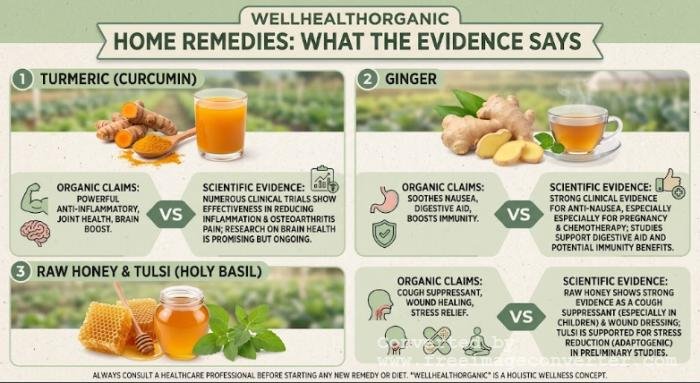
Home remedies are often attractive because they are inexpensive, familiar, and culturally familiar. Wellhealthorganic publishes material on Ayurvedic home remedies, including preparations involving ingredients such as ginger, turmeric, cumin, and other traditional products. However, evidence varies greatly from one remedy to another.
When a home remedy may be reasonable
A low-risk home practice may sometimes be appropriate for minor, temporary discomfort, provided it does not delay needed medical care. For example, ordinary self-care measures such as rest, adequate fluids, and appropriate nutrition can support general recovery from minor illnesses.
When home remedies should not replace medical treatment
Seek appropriate medical care rather than relying exclusively on a home remedy when symptoms are severe, persistent, rapidly worsening, or potentially life-threatening. Examples include:
- Difficulty breathing
- Chest pain
- Severe allergic reactions
- Serious injuries
- Severe dehydration
- Confusion or loss of consciousness
- Persistent or concerning symptoms
How to Build a Simple Healthy Daily Routine
A practical routine does not need to be complicated.
Morning: Start with a regular wake-up time, hydration according to your needs, and some movement. If breakfast is part of your routine, choose a nutritious combination rather than relying on highly sugary foods.
Afternoon: Choose a balanced meal containing several food groups. Add movement where possible, especially if your work involves prolonged sitting.
Evening: Keep dinner balanced and allow time to wind down. A consistent bedtime routine can make adequate sleep easier.
Weekly: Aim toward recommended physical activity levels, include muscle-strengthening exercises, plan nutritious meals, and review which habits are actually sustainable.
A Practical Wellhealthorganic Healthy Living Checklist
Use this simple checklist to review your habits:
- Eat a varied diet.
- Include fruits and vegetables regularly.
- Choose whole grains and pulses frequently.
- Select suitable protein sources.
- Limit excess salt, free sugars, saturated fat, and trans fat.
- Get regular aerobic activity.
- Include muscle-strengthening activity.
- Prioritize adequate sleep.
- Avoid tobacco.
- Manage stress through healthy strategies.
- Be cautious with herbal products and supplements.
- Seek professional care when symptoms require it.
Final Takeaway
Wellhealthorganic can be a useful starting point for people interested in natural wellness, nutrition, fitness, Ayurveda, and everyday health habits. The most important step, however, is to evaluate every health recommendation according to evidence, safety, and individual circumstances. The strongest foundation for better living is not a miracle ingredient or an extreme routine. It is a combination of nutritious food, regular movement, adequate sleep, healthy relationships, tobacco avoidance, sensible stress management, and appropriate medical care. WHO and CDC both support these broad lifestyle principles.
Natural and traditional practices can be considered thoughtfully, but “natural” should never be used as a substitute for evidence. Herbal products may interact with medicines, and some products carry safety or contamination concerns. The most practical approach is to start small: improve one meal, add regular movement, establish a better sleep routine, or replace one unhealthy habit with a healthier alternative. Over time, consistent choices can become a sustainable lifestyle rather than a temporary health challenge.
FAQs about Wellhealthorganic
Q1. What is Wellhealthorganic?
Ans: Wellhealthorganic is a wellness-oriented website covering subjects such as health, fitness, nutrition, home remedies, Ayurveda, skincare, beauty, and lifestyle. Its content can provide general wellness ideas, but readers should evaluate health claims using reliable evidence.
Q2. Is Wellhealthorganic a medical website?
Ans: Wellhealthorganic provides health and wellness information, but online articles should not be considered a replacement for individualized diagnosis or treatment from a qualified healthcare professional.
Q3. Is natural health advice always safe?
Ans: No. Natural products can have side effects, interact with medicines, or contain contaminants. NCCIH specifically advises consumers not to assume that natural products are automatically safe.
Q4. How can I eat healthier every day?
Ans: Build meals around a variety of vegetables, fruits, whole grains, pulses, and suitable protein sources. Limit excessive salt, free sugars, saturated fat, and industrial trans fat. WHO emphasizes adequacy, balance, moderation, diversity, and food safety as foundations of healthy eating.
Q5. How much exercise should adults get each week?
Ans: WHO recommends 150–300 minutes of moderate-intensity aerobic activity or 75–150 minutes of vigorous activity per week, or an equivalent combination. Adults should also perform muscle-strengthening activities on at least two days each week.
Q6. Can home remedies replace medicine?
Ans: Home remedies should not automatically replace medical treatment. Their usefulness and safety depend on the specific remedy and health problem. Serious, persistent, or worsening symptoms require appropriate professional evaluation.