
Solar energy is becoming one of the most popular solutions for people who want affordable, reliable, and environmentally friendly electricity. As electricity prices continue to increase, homeowners and business owners are searching for alternative energy sources to reduce their monthly expenses. Solar power offers an effective way to generate electricity from natural sunlight while reducing dependence on conventional energy sources. It can be used in residential buildings, commercial properties, agricultural facilities, and large industrial projects.
However, choosing the right solar installation can be confusing because different systems are designed for different energy needs. Some solar systems connect directly to the national electricity grid, while others store energy in batteries or operate independently. Understanding the types of solar system is important before making an investment. It helps you compare available options and select a solution based on your electricity consumption, budget, location, and backup power requirements.
Why Choosing the Right Solar System Matters
Every home and business has different electricity requirements. A small household may need solar electricity for lights, fans, televisions, and refrigerators. On the other hand, a commercial building may require a larger installation to operate computers, air conditioners, office equipment, and machinery.
Read More: Cashfree Payments: Features, Fees, Security, and How It Works
Choosing the right solar technology helps you use energy efficiently and avoid unnecessary installation costs. For example, an on-grid system may be suitable for a property with a reliable electricity connection, while an off-grid system may be a better option for a remote location without access to the national grid.
Before investing in solar technology, it is important to understand how each option works. Learning about the types of solar system also makes it easier to compare their features, installation requirements, advantages, and limitations.
7 Popular Types of Solar System for Clean Energy Solutions
Solar technology offers several ways to generate, store, and use energy. The available systems serve different purposes, from reducing household electricity bills to providing independent power in remote locations. The following seven options are among the popular solar solutions used in residential, commercial, and industrial applications.
| Solar System Type | Main Function | Battery Requirement | Common Application |
| On-Grid Solar System | Connects solar electricity to the utility grid | Usually not required | Homes and businesses |
| Off-Grid Solar System | Generates and stores independent electricity | Required | Remote properties |
| Hybrid Solar System | Combines grid connection and battery storage | Usually required | Homes and offices |
| Grid-Tied with Battery Backup | Provides solar electricity and backup power | Required | Residential buildings |
| Standalone Solar System | Operates independently for specific applications | Depends on design | Streetlights and pumps |
| Solar Thermal System | Uses sunlight to generate heat | Usually not required | Water heating |
| Concentrated Solar Power | Concentrates sunlight to generate thermal energy | Not typically required | Large power plants |
Each option has a different working process and application. Let’s explore these types of solar system in detail so you can understand which one may be suitable for your energy needs.
1. On-Grid Solar System
An on-grid solar system, also known as a grid-connected solar system, is one of the most common choices for residential and commercial buildings. It connects directly to the existing electricity network and uses solar panels to generate electricity during daylight hours.
The system generally includes solar panels, an inverter, mounting structures, electrical wiring, and safety equipment. Solar panels convert sunlight into direct current (DC) electricity, while the inverter converts it into alternating current (AC) electricity that can be used by household appliances and other electrical equipment.
When the solar panels generate more electricity than the property needs, the excess energy may be supplied to the utility grid. Depending on local regulations and available policies, net metering arrangements may allow consumers to receive credits for the electricity they export.
Advantages:
- Reduces monthly electricity expenses.
- Usually costs less than battery-based installations.
- Requires less maintenance because batteries are generally unnecessary.
- Makes efficient use of available rooftop space.
- Can support net metering where permitted.
Disadvantages:
- Standard systems generally shut down during grid outages.
- Cannot provide backup electricity without additional equipment.
- Electricity production depends on sunlight.
- Financial savings depend on local electricity rates and export policies.
Who Should Choose It?
An on-grid solar system is suitable for homes, offices, schools, shopping centers, and factories with reliable grid electricity. It is a practical choice for consumers who mainly want to reduce their electricity bills without investing in battery storage. Among the different types of solar system, this option is often considered by property owners who already have a stable electricity connection.
2. Off-Grid Solar System
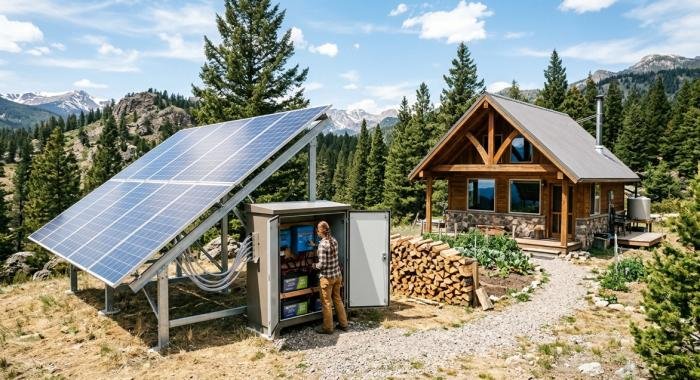
An off-grid solar system operates independently without connecting to the national electricity grid. It is particularly useful for remote homes, rural properties, agricultural facilities, and locations where conventional electricity is unavailable or unreliable.
This system uses solar panels to generate electricity and batteries to store surplus energy for later use. A charge controller manages the electricity flowing into the batteries, while an inverter converts stored DC electricity into AC power for compatible appliances.
During sunny weather, solar panels generate electricity and charge the batteries. At night or when sunlight is limited, the stored energy can supply electricity to the property. This makes off-grid installations useful for locations where a regular electricity connection is not available.
Proper planning is essential because the system cannot depend on the utility grid when battery storage becomes insufficient. Battery capacity, solar panel output, and daily electricity consumption must be considered before installation. These types of solar system are especially useful when energy independence is the main priority.
Advantages:
- Provides electricity in remote locations.
- Operates independently of the utility grid.
- Stores energy for nighttime use.
- Can support essential appliances during grid interruptions.
- Reduces dependence on conventional generators.
Disadvantages:
- Requires battery storage, increasing installation costs.
- Batteries eventually need replacement.
- Needs careful electricity consumption planning.
- Extended cloudy weather can reduce available energy.
- May require additional installation space.
Who Should Choose It?
Off-grid solar systems are suitable for rural homes, farms, remote communities, and properties without reliable electricity connections. They are especially useful for people who want an independent electricity supply and do not want to rely on the conventional power grid.
3. Hybrid Solar System
A hybrid solar system combines the features of on-grid and off-grid installations. It connects to the utility grid while also using batteries to store electricity for later use. This combination allows users to benefit from solar power, grid electricity, and battery backup.
The system generally includes solar panels, a hybrid inverter, batteries, mounting structures, and electrical protection equipment. During the day, solar panels generate electricity for connected appliances. Surplus energy can charge the batteries or be exported to the grid, depending on the system configuration and local regulations.
When solar production decreases, stored battery electricity can supply connected appliances. If additional electricity is required, the system can draw power from the utility grid.
One major benefit of this option is its flexibility. It allows users to benefit from grid connectivity while keeping stored solar power available for backup. For many homeowners, hybrid technology is one of the most practical types of solar system to consider when both electricity savings and backup power are important.
Advantages:
- Combines grid connectivity with battery storage.
- Provides backup power during compatible grid outages.
- Stores surplus solar electricity.
- Helps reduce dependence on utility electricity.
- Offers flexibility in managing energy consumption.
Disadvantages:
- Costs more than a basic on-grid system.
- Batteries require maintenance or eventual replacement.
- Needs a suitable hybrid inverter.
- Backup capacity depends on battery size.
Who Should Choose It?
Hybrid solar systems are suitable for homes, offices, and commercial buildings that experience frequent electricity interruptions. They are particularly useful for people who want to reduce electricity expenses while maintaining access to backup power.
4. Grid-Tied Solar System with Battery Backup
A grid-tied solar system with battery backup connects to the utility electricity network while also storing solar energy in batteries. Unlike a standard on-grid installation, this system can provide backup electricity when the grid becomes unavailable, provided it has compatible backup equipment.
During normal operation, solar panels generate electricity for household appliances. Surplus electricity can charge the batteries or flow into the utility grid, depending on the installation and local regulations.
When a power outage occurs, suitable backup equipment isolates selected circuits from the utility grid and supplies them using stored battery energy and available solar generation. This allows selected appliances to continue operating during an interruption.
For example, a homeowner may configure the system to operate essential appliances such as lights, fans, refrigerators, and internet routers during an outage. This arrangement is useful for people who want to maintain access to essential electricity without relying entirely on a generator.
Advantages:
- Provides backup electricity during grid failures.
- Stores solar energy for later use.
- Reduces dependence on utility electricity.
- Supports selected essential appliances.
- Offers greater flexibility than a standard grid-tied system.
Disadvantages:
- Requires additional investment in batteries.
- Backup duration depends on battery capacity.
- Batteries eventually need replacement.
- Not every grid-connected inverter supports backup operation.
Who Should Choose It?
This system is suitable for homeowners and businesses that have access to utility electricity but experience occasional power interruptions. It is a useful option when backup power is a priority but a complete off-grid installation is unnecessary.
5. Standalone Solar System
A standalone solar system supplies electricity to a particular application without depending on a conventional electricity connection. It is commonly used for small-scale or specialized energy requirements where connecting to the main electricity network may be difficult or expensive.
For example, solar-powered streetlights use panels to charge batteries during the day. The stored electricity then powers LED lights at night. Other applications include solar water pumps, traffic signals, remote sensors, and communication equipment.
These systems are designed according to the electricity requirements of the equipment they operate. Their capacity can vary depending on the application. Unlike a complete off-grid household installation, a standalone system may only need to power one device or a specific piece of equipment.
Advantages:
- Operates without a utility electricity connection.
- Suitable for remote and isolated locations.
- Reduces electricity infrastructure requirements.
- Can operate automatically with suitable controls.
- Useful for specialized equipment and small electrical loads.
Disadvantages:
- Electricity output is limited by system capacity.
- Battery storage may be necessary.
- Requires proper system sizing.
- Some applications need additional backup arrangements.
Who Should Choose It?
Standalone solar systems are suitable for streetlights, agricultural water pumps, remote monitoring devices, and telecommunications equipment. They are particularly useful where connecting to the conventional electricity network would be expensive or inconvenient.
6. Solar Thermal System
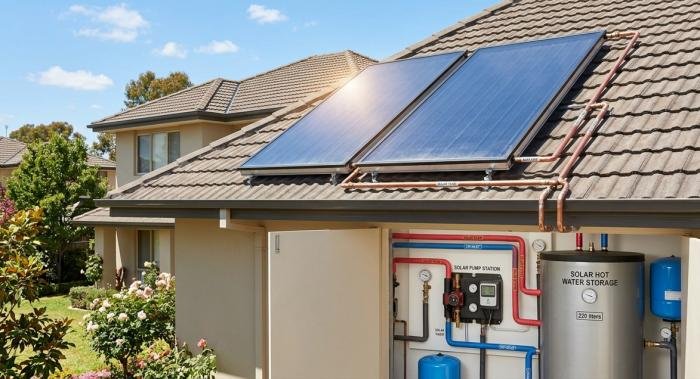
A solar thermal system uses sunlight to generate heat rather than directly producing electricity through photovoltaic panels. It collects solar radiation and transfers the heat to water, air, or another suitable fluid.
This technology is commonly used for domestic water heating, swimming pools, space heating, and certain industrial processes. It can help reduce the amount of electricity or conventional fuel required for heating purposes.
A typical solar thermal installation includes solar collectors, insulated storage tanks, pipes, and temperature control equipment. Flat-plate collectors and evacuated-tube collectors are two common technologies used in solar water heating systems.
For example, hotels, hospitals, and residential buildings can use solar thermal equipment to heat water and reduce their dependence on electricity or conventional fuels. Unlike photovoltaic installations, this technology focuses mainly on producing usable heat.
When comparing the types of solar system, it is important to remember that solar thermal technology serves a different purpose from systems designed primarily to generate electricity.
Advantages:
- Uses renewable sunlight to generate heat.
- Reduces energy consumption for water heating.
- Can lower electricity and fuel expenses.
- Suitable for residential and commercial applications.
- Helps reduce emissions associated with conventional heating.
Disadvantages:
- Performance depends on sunlight availability.
- Requires suitable installation space.
- May need supplementary heating during cloudy periods.
- Some systems require pumps and maintenance.
- Primarily produces heat rather than general electricity.
Who Should Choose It?
Solar thermal systems are suitable for homes, hotels, hospitals, restaurants, swimming pools, and industries that regularly require hot water. They are a useful option when the main energy requirement is heating rather than general electricity generation.
7. Concentrated Solar Power System
A concentrated solar power (CSP) system uses mirrors or reflective surfaces to concentrate sunlight onto a receiver. Unlike photovoltaic solar panels, which convert sunlight directly into electricity, CSP systems use concentrated solar energy to produce heat.
The collected heat can generate steam, which drives a turbine connected to an electrical generator. Some installations also include thermal storage, allowing collected heat to be used for electricity generation when sunlight is unavailable.
Common CSP technologies include parabolic trough systems, solar power towers, linear Fresnel reflectors, and dish-based systems. Each technology uses a different arrangement of reflective surfaces to collect and concentrate solar energy.
These installations are generally used in large-scale electricity generation projects and require significant land and investment. Therefore, they are different from the rooftop solar solutions commonly installed in residential buildings.
Advantages:
- Suitable for large-scale electricity generation.
- Can incorporate thermal energy storage.
- Uses renewable sunlight as an energy source.
- Can support electricity production after sunset when storage is available.
- Reduces reliance on fossil fuel-based power generation.
Disadvantages:
- Requires substantial investment.
- Needs large installation areas.
- Works best in locations with strong direct sunlight.
- Involves complex mechanical and thermal equipment.
- Usually unsuitable for residential properties.
Who Should Choose It?
Concentrated solar power systems are mainly suitable for utility companies, energy developers, and large electricity generation projects. They are generally not designed for ordinary residential rooftop installations.
Important Factors to Consider Before Choosing a Solar System
Choosing among the different types of solar system requires careful planning. The right option depends on your electricity consumption, available budget, property location, and need for backup power. Before installing solar equipment, consider the following factors.
1. Daily Electricity Consumption
Calculate how much electricity your household or business uses every day. Check your appliances, their power ratings, and average operating hours. This information helps determine the required solar panel capacity and the amount of electricity your installation needs to generate.
2. Initial Installation Budget
Installation costs depend on solar panel capacity, inverter quality, batteries, mounting structures, and labor. On-grid installations generally cost less than comparable battery-based systems. However, equipment quality, warranty coverage, and long-term savings should also influence your decision.
3. Battery Storage Requirements
If you need backup electricity during nighttime or power interruptions, consider a system with battery storage. Battery capacity should match the appliances you want to operate and the expected backup duration. A larger battery may increase the initial investment, so calculate your actual backup requirements before purchasing one.
4. Available Installation Space
Check your roof size, direction, angle, and possible shading from nearby buildings or trees. A professional installer can evaluate the available space and recommend a suitable panel arrangement. Proper placement helps the panels receive sufficient sunlight.
5. Local Weather Conditions
Cloudy weather and rainfall can affect solar electricity production. Although panels can still generate electricity during cloudy conditions, output is generally lower than under clear sunlight. Consider local sunlight availability when estimating expected energy production and selecting the system capacity.
6. Equipment Quality and Maintenance
Choose reliable solar panels, inverters, batteries, and electrical protection equipment. Check product specifications, warranties, and manufacturer reliability. Professional installation and periodic inspection can also help maintain the system’s performance over time.
Benefits of Installing a Solar Energy System
Solar energy offers several benefits for residential and commercial users. Understanding these advantages can help you decide which of the types of solar system is appropriate for your property.
Reduced Electricity Bills: Solar panels generate electricity that can be used instead of purchasing the same amount from the utility provider. Actual savings depend on system capacity, electricity rates, and consumption patterns.
Environmentally Friendly Energy: Solar power generates electricity without burning fossil fuels during operation. It can help reduce greenhouse gas emissions associated with conventional electricity generation.
Long-Term Savings: Solar panels are designed to operate for many years. Although the initial investment can be significant, electricity savings may help offset installation expenses over time.
Greater Energy Independence: Systems with battery storage allow users to store electricity and use it when solar production decreases or the grid supply is interrupted. This can be especially helpful in locations with unreliable electricity services.
Multiple Applications: Solar technology can support homes, offices, schools, hospitals, factories, farms, and remote infrastructure. The availability of different system designs makes solar energy useful for a wide range of requirements.
Conclusion
Choosing from the different types of solar system depends on your electricity requirements, available budget, property location, and long-term goals. An on-grid installation may help reduce electricity bills, while an off-grid system provides independent electricity in remote locations. Hybrid systems offer another practical option by combining grid connectivity and battery storage. Grid-tied systems with battery backup can support essential appliances during power interruptions, while standalone systems are useful for specialized applications.
Solar thermal and concentrated solar power technologies serve different heating and large-scale energy requirements. Before making a final decision, compare available technologies, calculate your daily electricity consumption, and consult a qualified solar installer. With suitable equipment and professional installation, solar energy can provide reliable power, lower electricity expenses, and support a cleaner environment.
FAQs about types of solar system
Q1. What are the 7 main types of solar system?
Ans: The seven options covered in this article are on-grid, off-grid, hybrid, grid-tied with battery backup, standalone, solar thermal, and concentrated solar power systems. Each serves different electricity or heating requirements.
Q2. Which type of solar system is best for a home?
Ans: An on-grid system is suitable for homes with reliable electricity connections. A hybrid system is useful when backup power is also required, while an off-grid system is appropriate for properties without grid access. The best choice depends on your electricity consumption, budget, and backup requirements.
Q3. What is the difference between on-grid and off-grid solar systems?
Ans: An on-grid system connects to the utility electricity network and generally does not require batteries. An off-grid system operates independently and normally requires batteries to store electricity for later use.
Q4. Can solar panels work during a power outage?
Ans: Standard on-grid systems usually shut down during grid outages. However, hybrid systems and grid-connected systems with properly configured battery backup can supply electricity to supported circuits.
Q5. How many solar panels are needed to power a house?
Ans: The number depends on household electricity consumption, panel wattage, sunlight availability, and system efficiency. A professional installer can calculate the required capacity based on your daily energy usage.
Q6. Are hybrid solar systems worth the investment?
Ans: Hybrid systems can be worthwhile for households that need backup electricity and want to reduce their dependence on the utility grid. Their financial benefits depend on battery costs, electricity prices, and energy consumption.